You do not need an Emirati sponsor who owns a majority of your company. That rule is gone for most businesses, and it has been for years, yet it is still the first worry almost every founder brings to us. Starting a business in Dubai as a foreigner in 2026 means full ownership, a process you can run mostly from your laptop, and a licence in hand in about a week if the paperwork lands right the first time.
The catch is that "mostly straightforward" is not the same as "hard to get wrong". The order of the steps matters, and the jurisdiction you pick matters more. Three specific mistakes catch first-timers every single month, so this guide walks the whole path in the order it actually happens.
Can a foreigner really own 100% of a business in Dubai?
Yes, genuinely. Every UAE free zone gives foreign founders 100% ownership and always has; that is the core of the free zone offer. Since 2021, most mainland activities allow full foreign ownership as well (the official u.ae business portal keeps the current rules). Only a short list of strategic activities still needs an Emirati partner or agent.
So the real question is not whether you can own your company. It is which of the two jurisdictions fits the way you plan to make money.
A free zone company is the default for founders selling abroad, online, or to other businesses. It is cheaper to start, quick to set up, and built for foreign owners from day one. The trade-off is a hard rule that surprises people: free zone companies cannot invoice UAE mainland customers directly. Reaching them means routing through a locally registered distributor, taking a dual licence, or opening a branch onshore.
Mainland suits businesses that need to trade anywhere in the UAE without an intermediary. Think shops, restaurants, contracting firms, anyone whose customers are physically here. Its licences generally open at a higher price point and move around more with the activity. We wrote a full comparison in our free zone vs mainland guide if this is the decision you are stuck on.
How to start a business in Dubai, step by step
The process runs in a fixed order: choose your business activity, pick a jurisdiction, gather documents, clear any approvals, receive the licence, then apply for visas. The first two decisions carry nearly all the weight; from there it is mostly paperwork and waiting.
- Pin down your activity. Everything keys off this choice. It sets your licence type: Commercial for trading physical goods, Professional for services, consultancy and most software, Industrial for manufacturing. It also determines which zones can host you and whether a regulator has to sign off before you trade. Be precise here, not broad.
- Choose your jurisdiction. Free zone or mainland, as above. This is the one decision genuinely worth getting advice on, because changing your mind later means a new licence, not an edit. Our guide to UAE business setup walks through both routes in plain terms.
- Gather your documents. Passport copies for every shareholder and director, a few proposed company names, and a short description of what the business will do. Some zones ask for more, perhaps a simple business plan or a bank reference. Requirements vary by zone, so confirm the exact list before you submit anything.
- Clear third-party approvals if your activity needs them. Some activities need sign-off before trading from bodies like Dubai Municipality, the Central Bank, the RTA or the UAE Media Council. This is far more common than founders expect. In Dubai South, for example, roughly a third of the licensed activities need one.
- Receive your licence. Once your details and approvals are in, most free zone setups complete in about a week. For most licences nobody asks you to lock up share capital anymore, so there is no parking cash just to prove you are serious.
- Apply for your visas. The company sponsors your residence visa and your team's. How many visas the company can sponsor follows from its workspace, which is why the flexi-desk question below matters more than it sounds.
Do you need to be in the UAE to set everything up?
Not for most of it. The licence application, document submission and company formation can usually be handled remotely, and plenty of founders hold a UAE licence before they ever board a flight. You will need to be here in person for the residence visa steps and, in most cases, for the bank.
The remote part covers the paperwork: signing incorporation documents, submitting passport copies, approving the final activity list. Zones differ in how much they allow digitally, so "fully remote" varies by zone rather than being a promise anyone should make you.
What brings you here in person is the visa. A UAE residence visa involves a medical test and biometrics for your Emirates ID, and those happen inside the country. Banks are the other anchor. Most want to meet the account signatory face to face before opening a business account, and in our experience the bank account is where timelines actually slow down, not the licence.
A pattern that works well: run the whole setup remotely, then plan one trip that bundles the visa steps, the bank meeting and a first look at your workspace.
One flight instead of three.
What does a Dubai business licence cost?
Less than most people fear, at least at the entry level. On current market pricing an entry free zone package with a shared desk opens around AED 12,500, a residence visa lifts the yearly total from there, and mainland starts higher with more swing by activity.
That is the headline figure, and headlines hide things. The real budget has more moving parts: visa fees per person, the medical and Emirates ID steps, workspace beyond the shared-desk tier if you need it, and the odd approval charge depending on your activity. Our cost guide breaks the whole thing down line by line, including where the cheapest quotes tend to hide their later charges.
The flexi-desk starting point
Nearly everyone opens with one, because in many free zones it is the minimum physical presence a licence requires, and it keeps fixed costs close to zero while you find out whether the business actually works. A flexi-desk is a shared workspace entitlement rather than an office of your own. Offices, warehouses and land can all come later.
The one real constraint is visas. Your visa allocation is tied to your workspace, and a flexi-desk supports fewer visas than an office does. A solo founder or a two-person team is usually fine. If you plan to sponsor a bigger team in year one, size the workspace to match before you commit, not after.
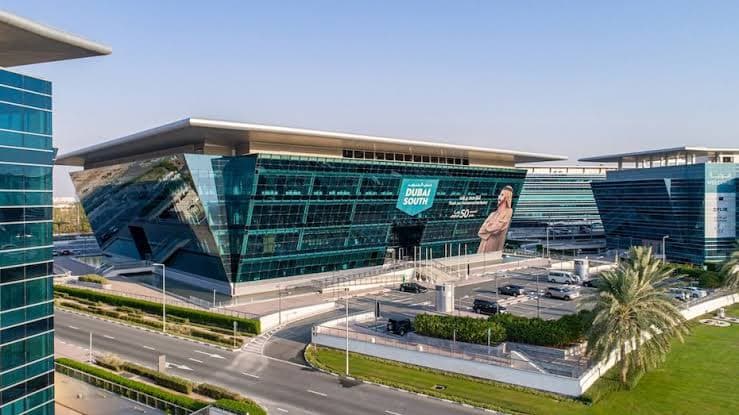
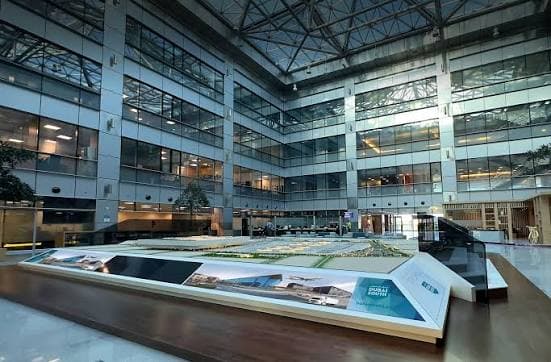
To make this concrete, here is what the entry point looks like at Dubai South, the independent free zone built around Al Maktoum Airport (DWC), next door to Jebel Ali. Logistics, aviation, trading and e-commerce are its home turf, a shared desk gets you licensed, and the whole registration wraps in days. Our Dubai South guide covers the zone in full.


The mistakes first-timers keep making
Three come up constantly: choosing a free zone on price alone, discovering the mainland-sales rule after signing, and assuming the 0% corporate tax rate arrives automatically with the licence. Each one is cheap to avoid before you commit and expensive to unwind afterwards.
Picking a zone by price alone. The cheapest licence is not the cheapest company. Zones differ in which activities they host, how many visas your workspace supports, what renewals cost and how banks view them. A licence that saves you a little upfront and then blocks the exact activity you need, or stalls your bank account, is not a saving. Match the zone to the business first, then compare prices among the zones that actually fit.
Ignoring the mainland-sales rule. Free zone companies get no direct line to onshore customers. If the people you sell to are mainland businesses or UAE consumers, decide on day one how you will reach them, whether that is a distribution partner, a dual licence, or an onshore branch. Founders who skip this question tend to find themselves restructuring in year one, which is the expensive way to learn it.
Assuming 0% tax is automatic. The zero-tax outcome runs through Qualifying Free Zone Person (QFZP) status, and it arrives with conditions attached plus an audit to keep it. Budget for proper accounting from the start and treat 0% as something you maintain, not something you were handed with the licence.
And before any of it: make sure the idea itself deserves a licence, because nothing about starting a business in Dubai fixes a business that should not start. You can validate your idea free in a few minutes, and it is a better first step than any price comparison between zones.
Questions people actually ask
Can a foreigner own 100% of a business in Dubai?
Yes. Every UAE free zone offers 100% foreign ownership, and since 2021 most mainland activities do as well. The exception is a short list of protected activities where a local partner or agent is still part of the deal.
How much money do you need to start a business in Dubai as a foreigner?
From about AED 12,500 for a lean first year on current market pricing, more once visas and bigger workspace join the bill. There is no capital deposit to lock away for most licences. Our cost guide breaks down every line so you can compare quotes properly.
How long does it take to get a business licence in Dubai?
Most free zone setups complete in about a week once your details and approvals are in. Activities that need third-party approvals from a regulator can take longer, so check the requirements for your exact activity before you apply.
Do I need to live in the UAE to start a company there?
No. You can usually complete the licence application remotely. You will need to be in the UAE in person for the residence visa steps, such as the medical test and biometrics, and most banks prefer to meet the account signatory face to face.
What documents do I need to register a company in Dubai?
Passport copies for every shareholder and director, a few proposed company names, and a short description of the business. Some zones also ask for a simple business plan or a bank reference, so confirm the exact list before submitting.